3 use cases to a connected healthcare product
3 use cases to a connected healthcare product
3 use cases to a connected healthcare product
Product
Sara AI
Sara AI
Industry
Health
Health
Timeline
3 Weeks
3 Weeks
Tools
Figma, Lovable, Bolt
Figma, Lovable, Bolt
Context
Context
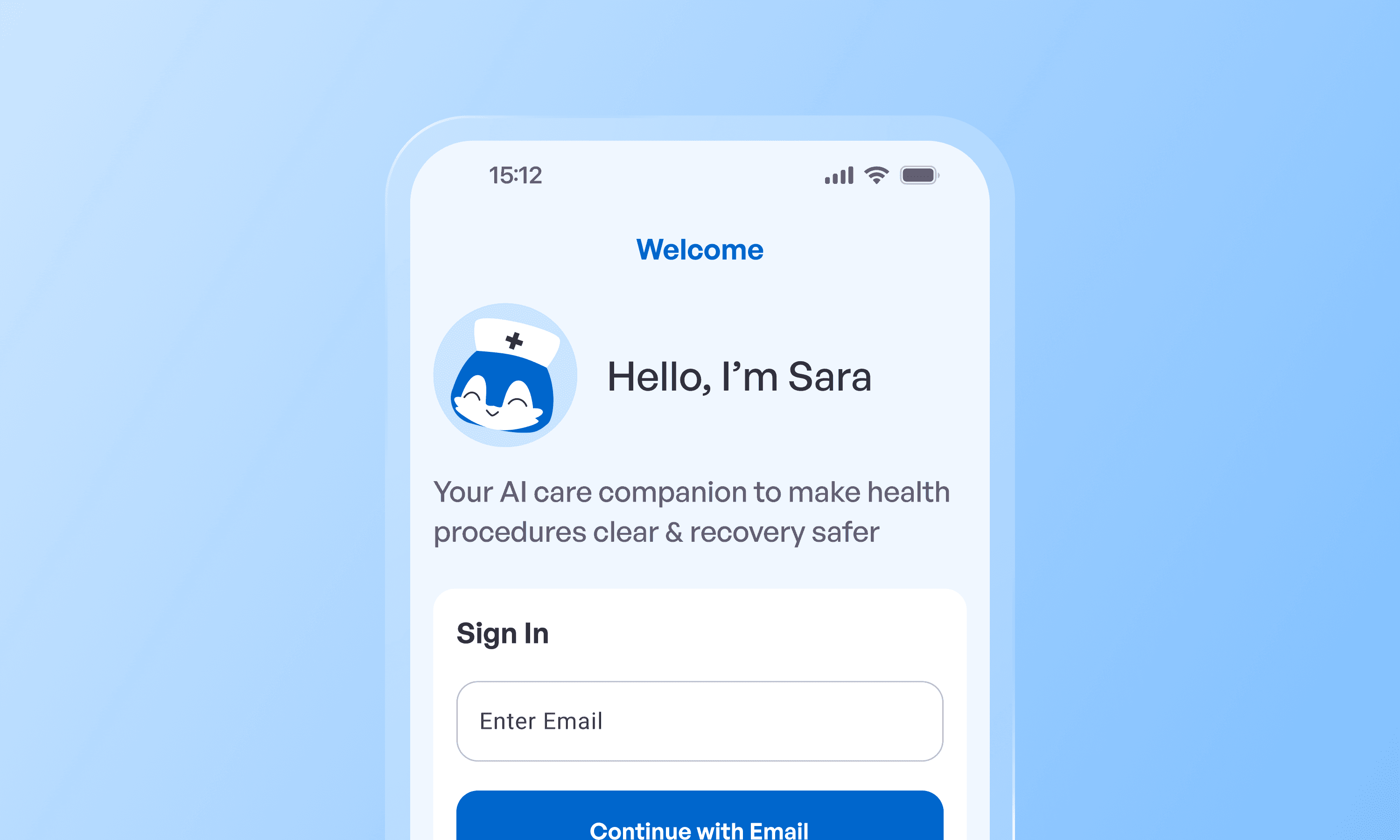
Sara is an AI care companion designed to support patients before & after medical procedures through guided tasks, progress tracking, and conversational support.
Sara is an AI care companion designed to support patients before & after medical procedures through guided tasks, progress tracking, and conversational support.
The Challenge
The Challenge
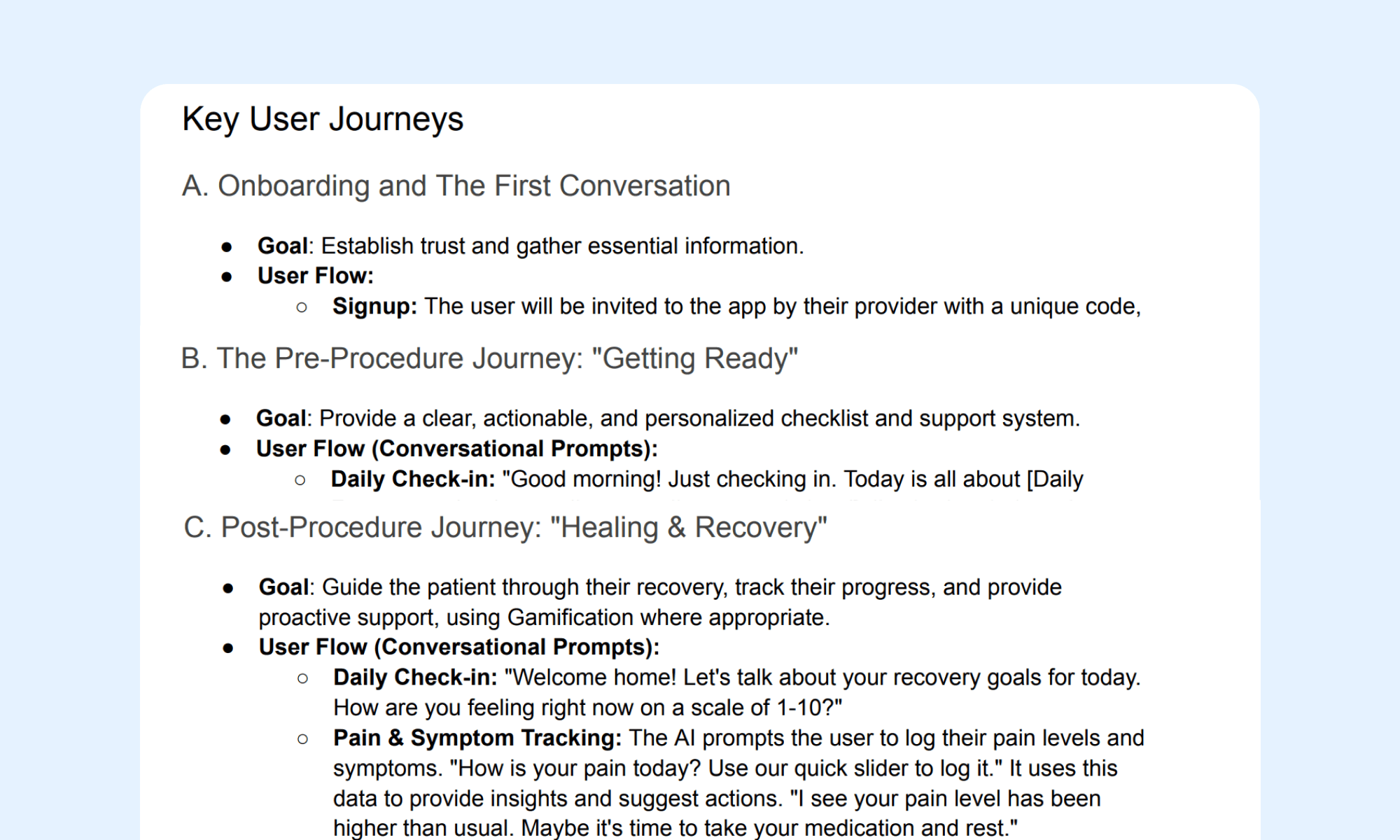
The initial brief included only 3 healthcare use cases & a 5-day timeline to visualize them for stakeholder discussions But the workflows behind those use cases were still loosely defined
The initial brief included only 3 healthcare use cases & a 5-day timeline to visualize them for stakeholder discussions But the workflows behind those use cases were still loosely defined

Connecting The Flow
Connecting The Flow
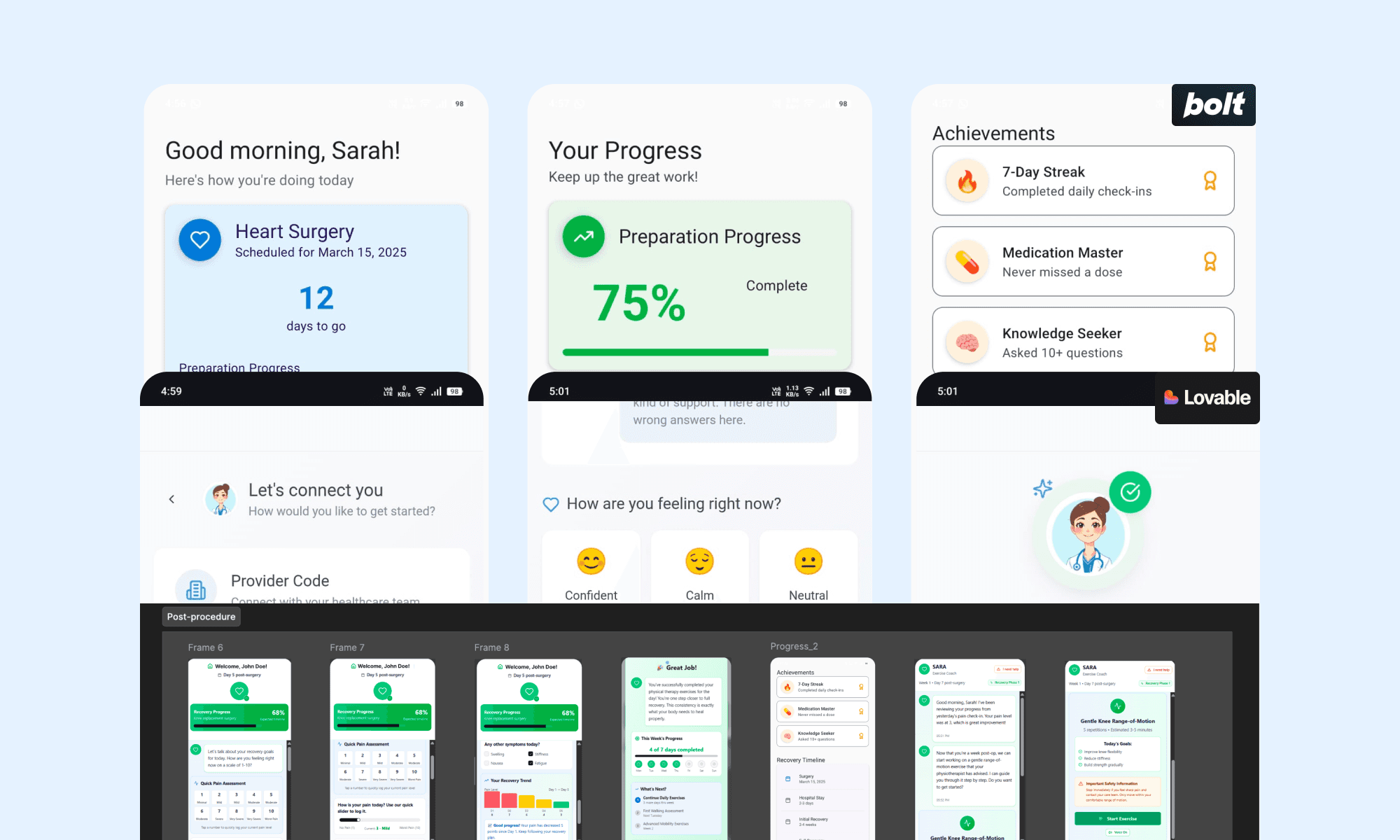
While stakeholders approved the initial direction, the screens still felt disconnected in my POV The shared brief & generated concepts showed features, but they didn't explain how a patient would move between recovery progress, medications, tasks, & conversations
While stakeholders approved the initial direction, the screens still felt disconnected in my POV The shared brief & generated concepts showed features, but they didn't explain how a patient would move between recovery progress, medications, tasks, & conversations

Designing For Recovery
Designing For Recovery
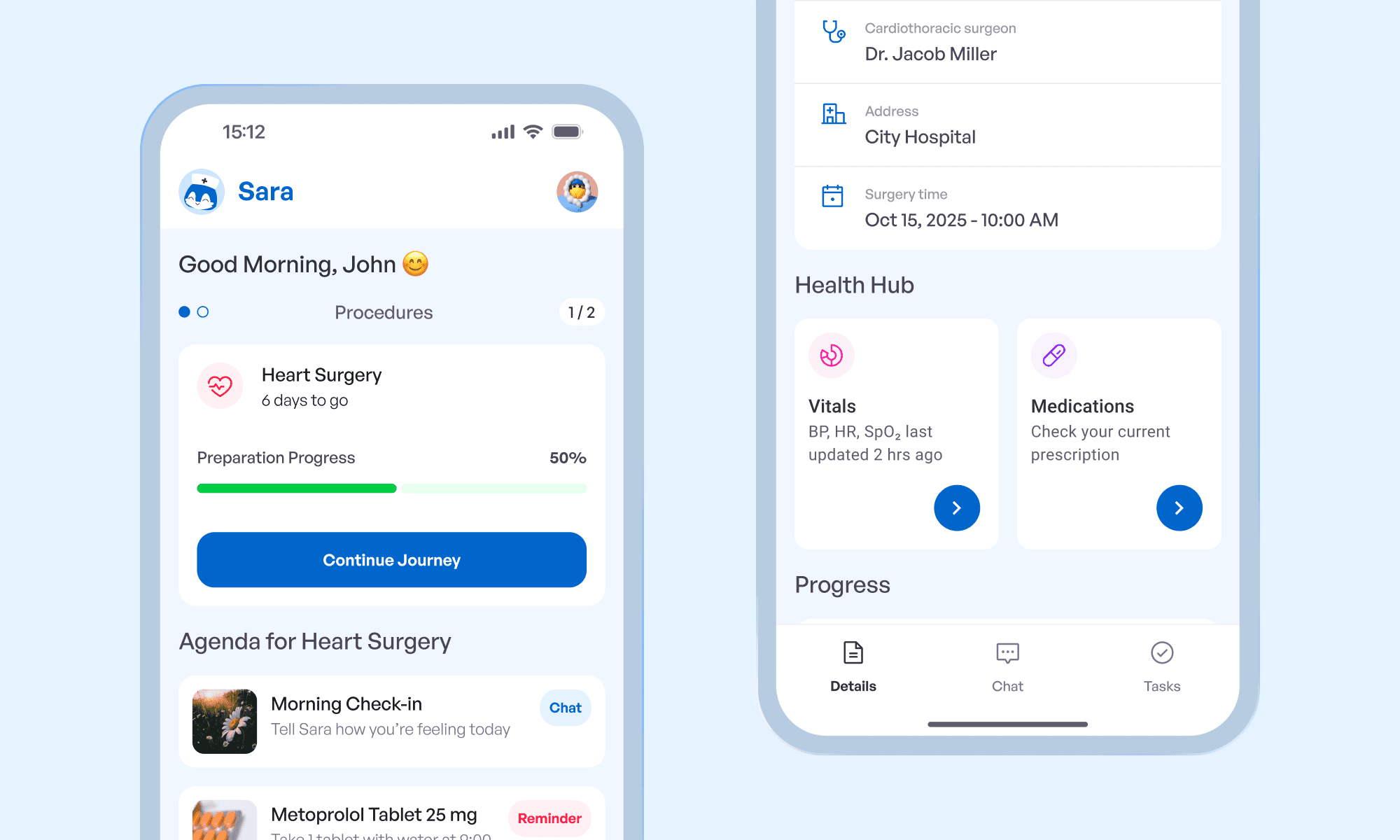
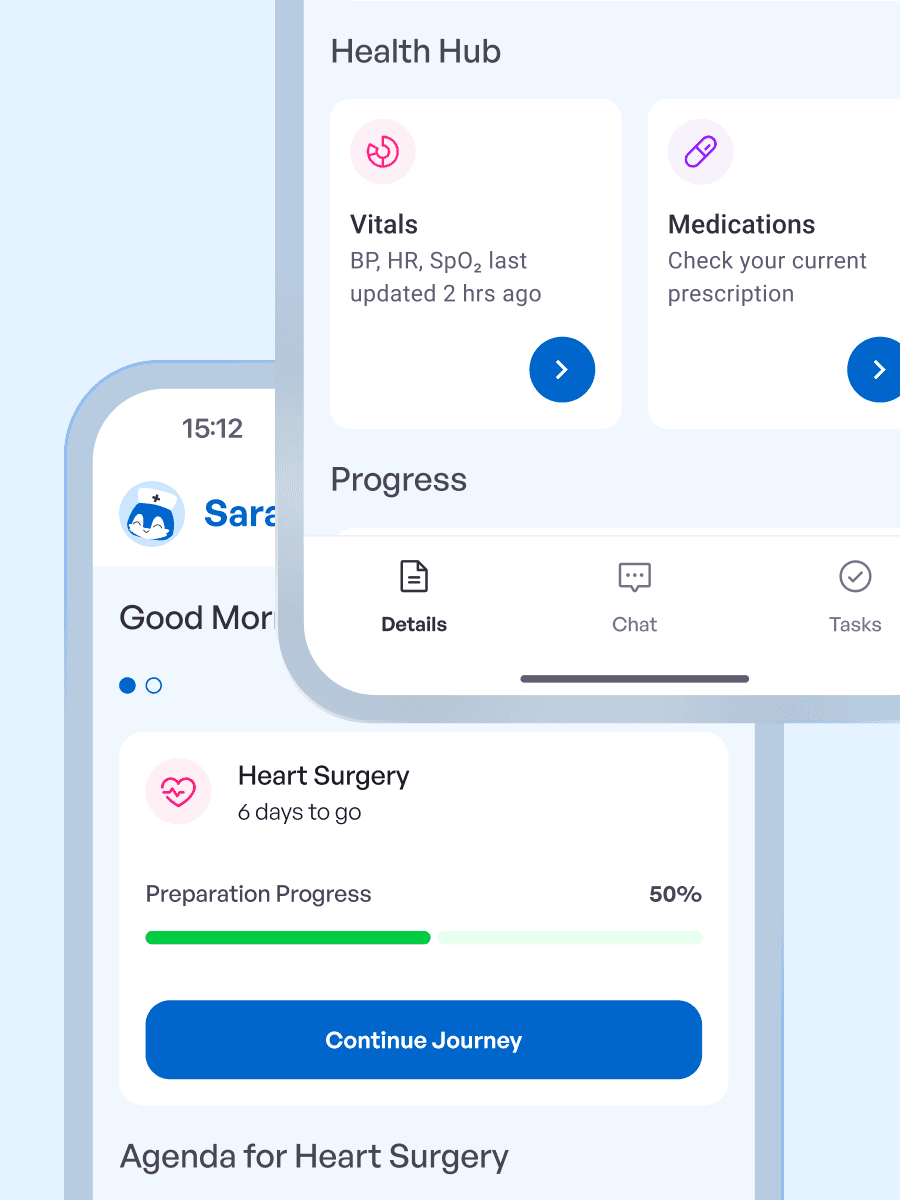
The biggest gap in the early concepts was continuity. To create a clearer experience, I organized the product around individual procedures, so that progress, tasks, medications, & Sara stay connected within the same context This reduced navigation complexity & helped patients focus on a single recovery journey
The biggest gap in the early concepts was continuity. To create a clearer experience, I organized the product around individual procedures, so that progress, tasks, medications, & Sara stay connected within the same context This reduced navigation complexity & helped patients focus on a single recovery journey
Critical Decisions
Critical Decisions
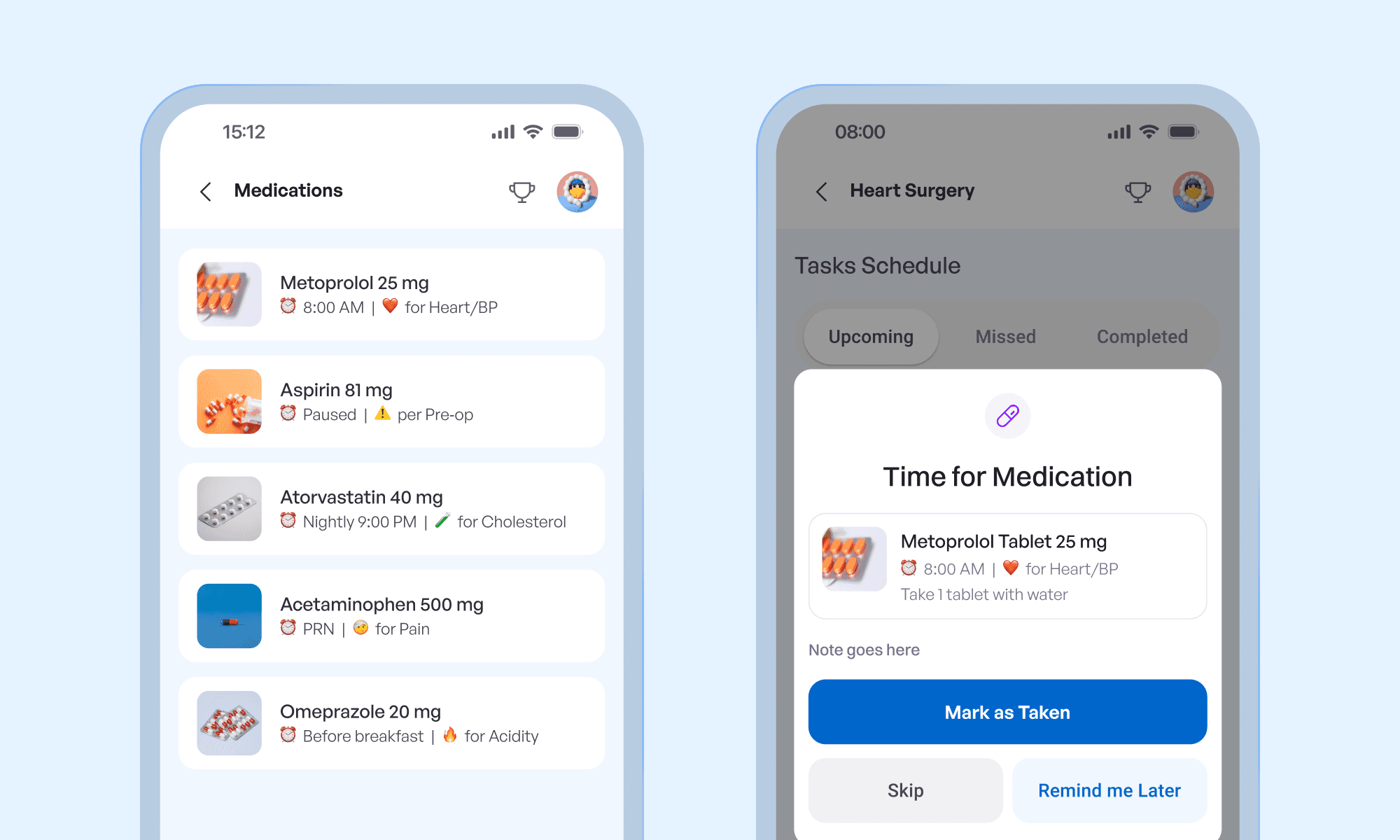
1. Visual medication identity - Combined medication images, schedules, & usage details to help patients identify medicines faster 2. Actionable reminders - Reduced the stress of missing medications by adding reminders with actionable prompts 3. Faster conversations - Introduced suggested replies, ratings, & quick interactions to reduce typing effort 4. Caregiver visibility - Extended procedure visibility to caregivers through view-only access, helping patients stay supported
1. Visual medication identity - Combined medication images, schedules, & usage details to help patients identify medicines faster 2. Actionable reminders - Reduced the stress of missing medications by adding reminders with actionable prompts 3. Faster conversations - Introduced suggested replies, ratings, & quick interactions to reduce typing effort 4. Caregiver visibility - Extended procedure visibility to caregivers through view-only access, helping patients stay supported

Concept To Product
Concept To Product
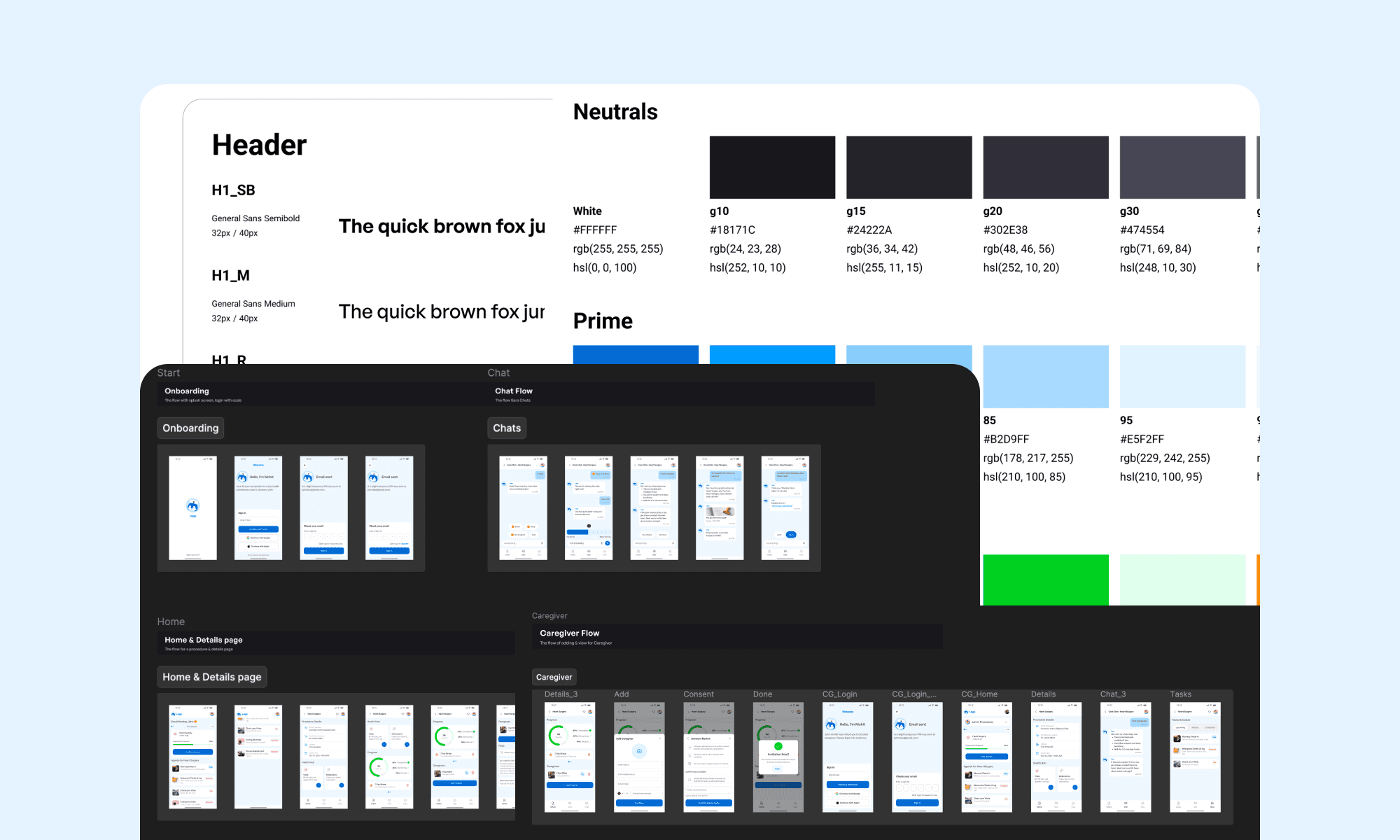
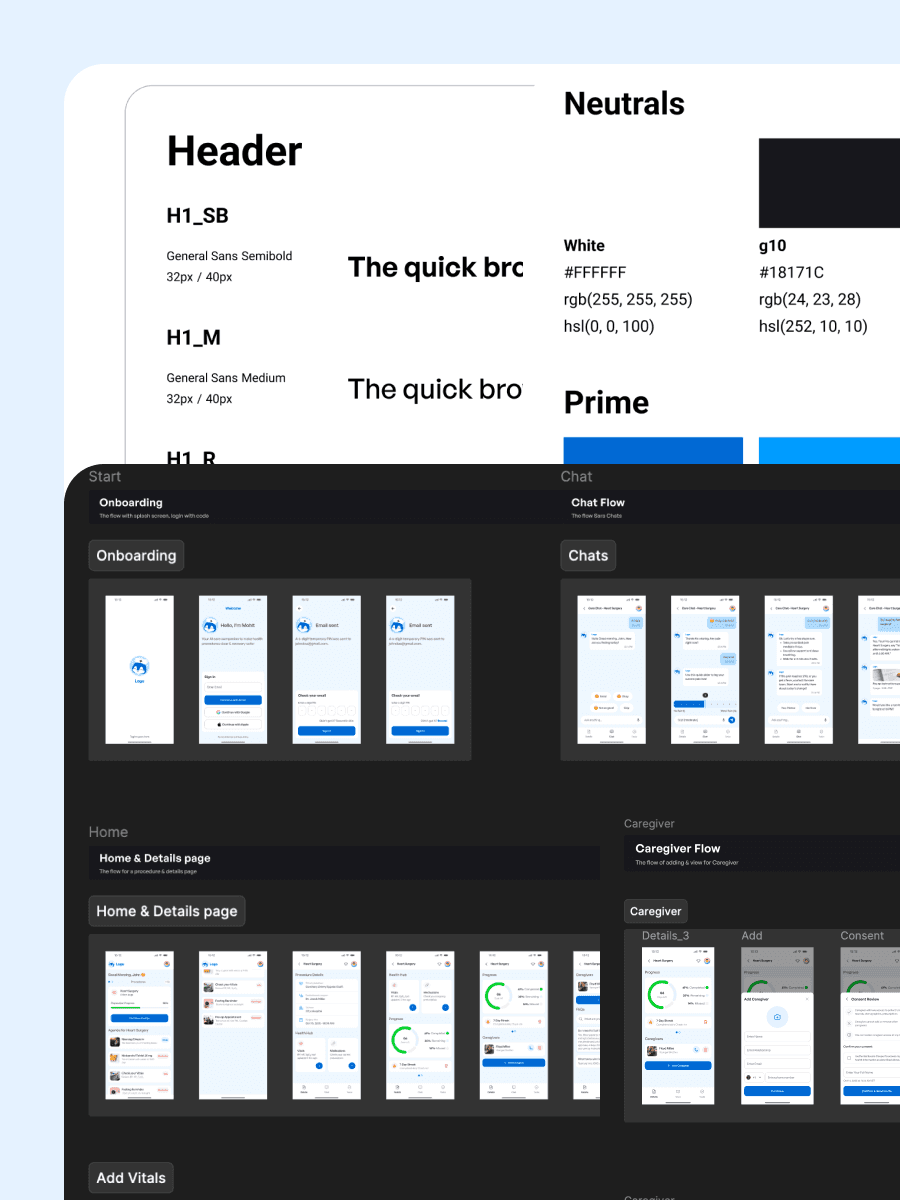
What started as use cases evolved into a connected healthcare product vision The final delivery included 40+ refined screens, reusable design foundations & dev handoff sections
What started as use cases evolved into a connected healthcare product vision The final delivery included 40+ refined screens, reusable design foundations & dev handoff sections
Impact & Learnings
Impact & Learnings
Small details like emojis, quick replies, & visual cues made the experience feel more approachable for patients This project taught me that designing the spaces between screens is often more important than designing the screens themselves
Small details like emojis, quick replies, & visual cues made the experience feel more approachable for patients This project taught me that designing the spaces between screens is often more important than designing the screens themselves